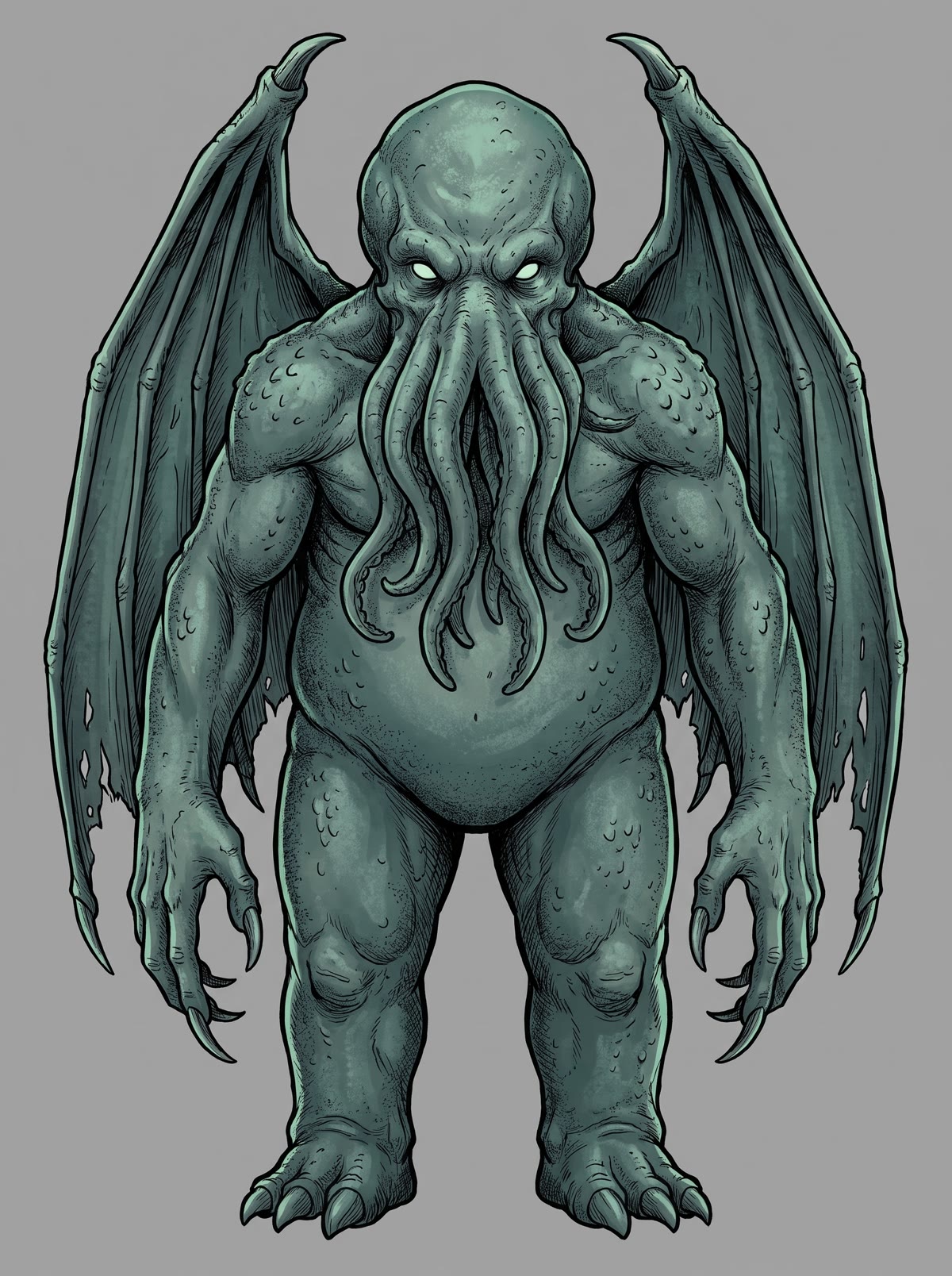
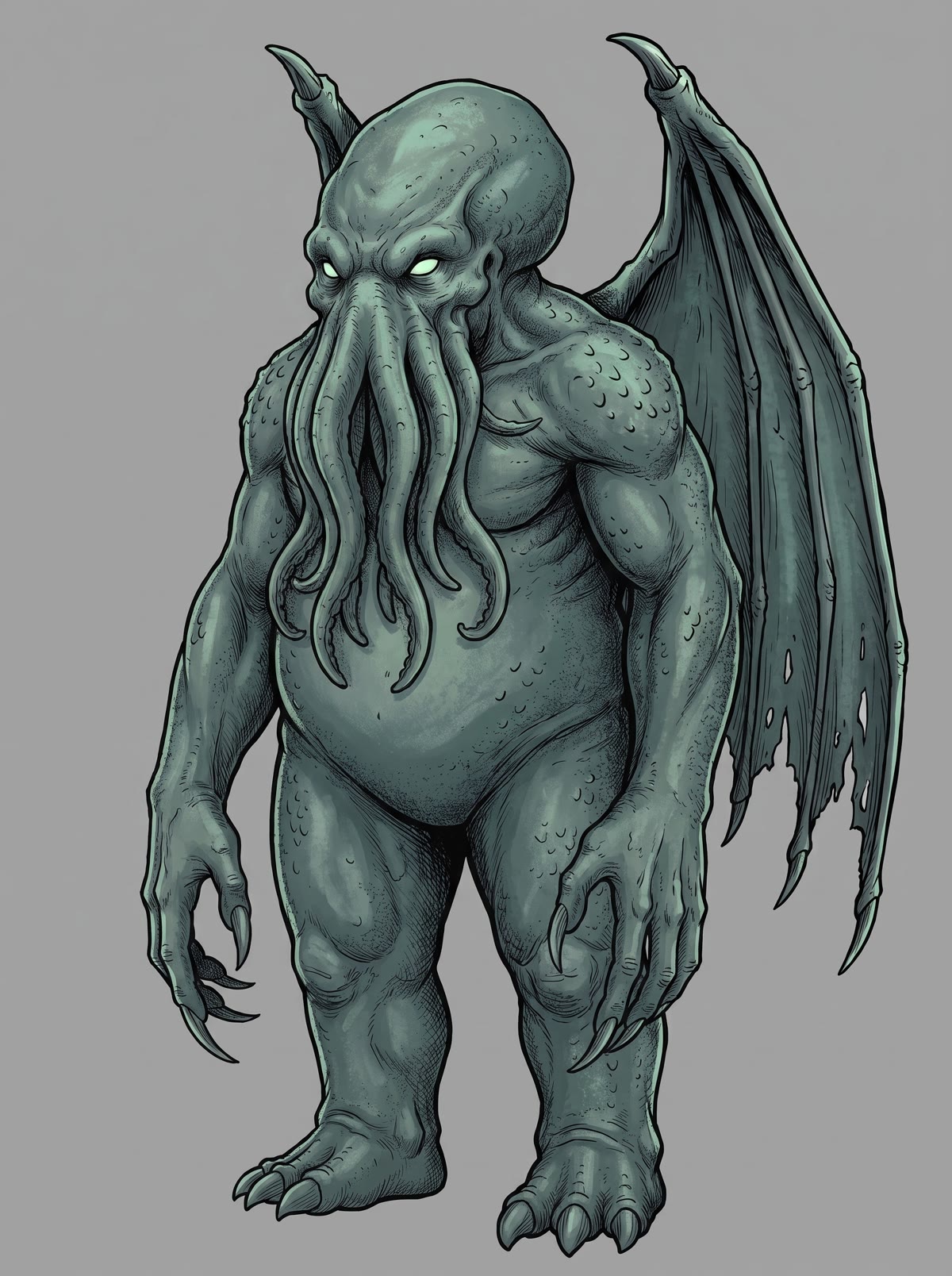
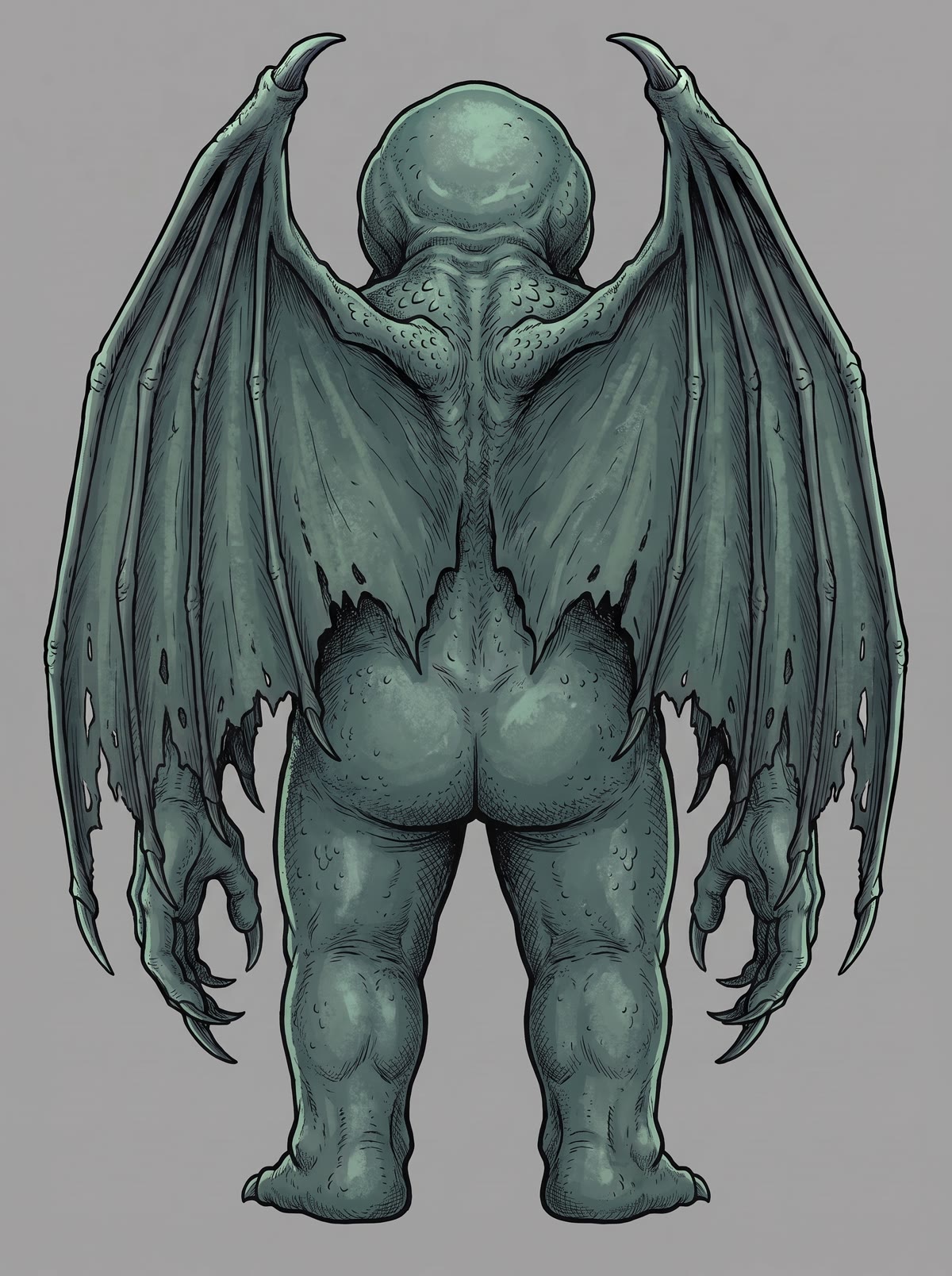
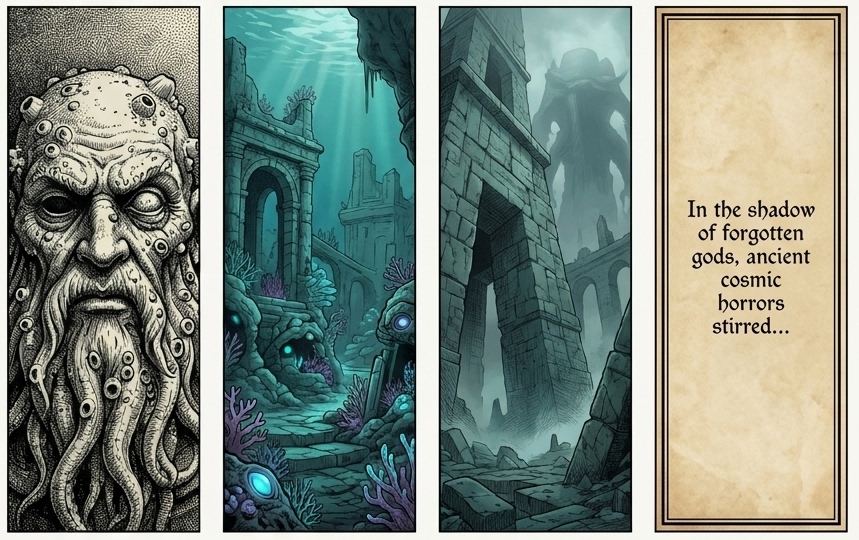
Before the oceans had names, something fell into them.
Lovecraft told it as a file of documents — a dead professor's notes, a sailor's log, a bas-relief nobody should have carved. The series tells it as the thing the documents circle: the dreams themselves.
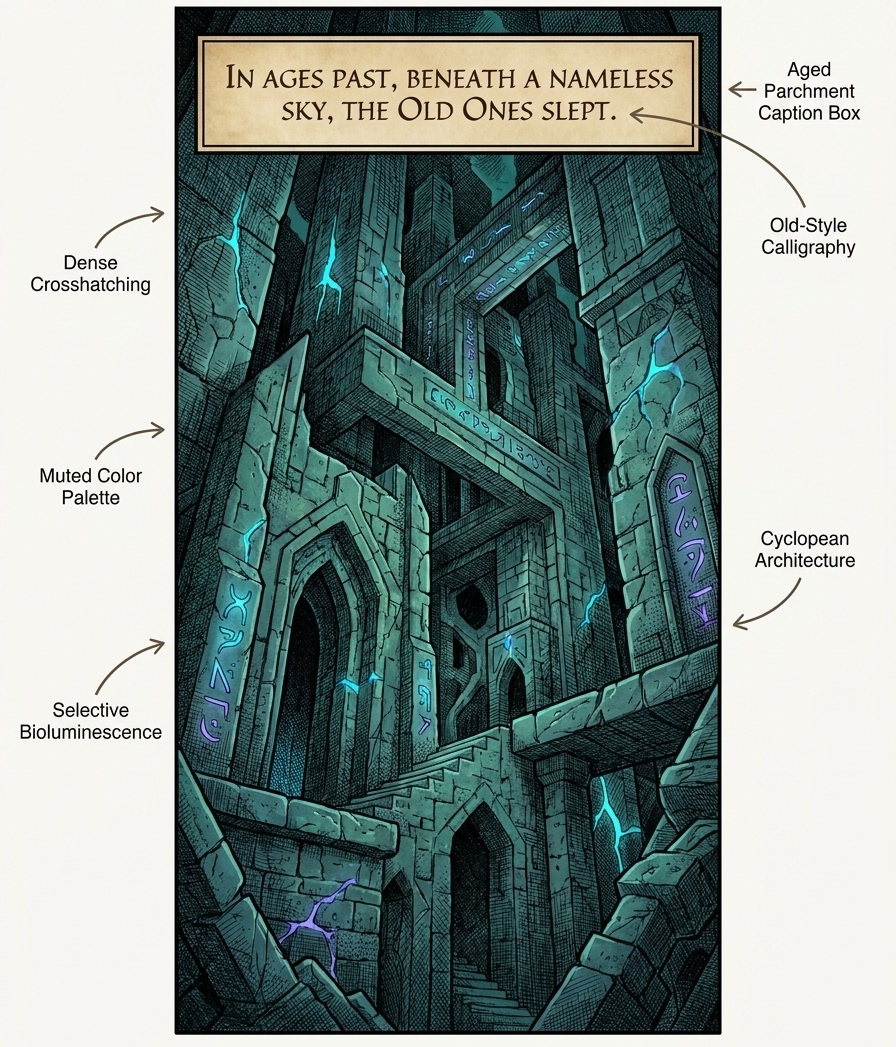
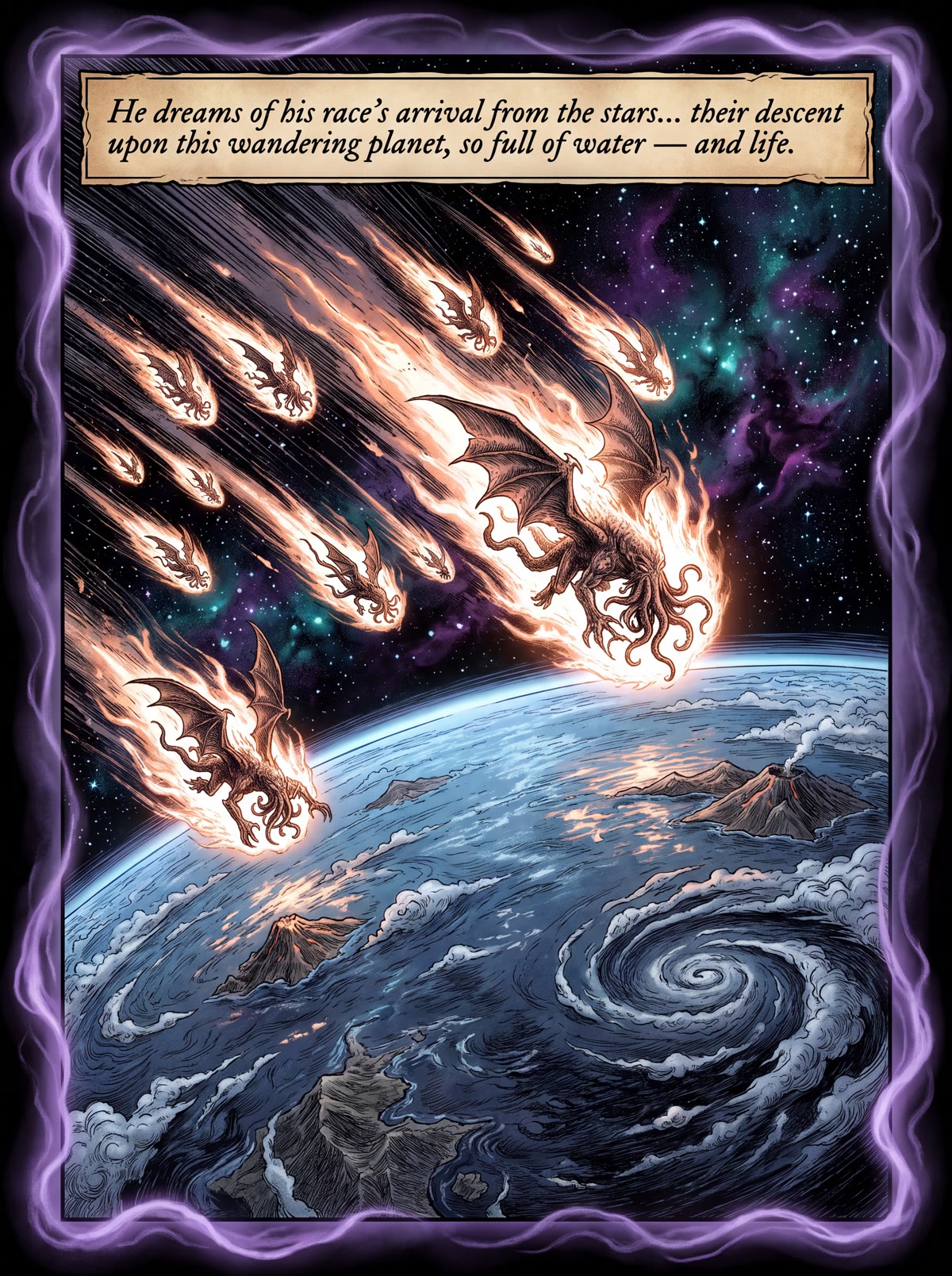
Episode 1 goes back before the story's 1920s frame, to the account buried in its third chapter: the Great Old Ones came down from the stars when the Earth was young, raised a stone city in the sea, and when the geometry of the sky changed, sank with it — not dead, but dreaming.
"The Call of Cthulhu" entered the public domain along with the rest of Weird Tales' 1928 run — the same public-domain footing as Dick Tracy Origins. The adaptation owes no license; it owes the text.
The visual register is the book, not the blockbuster: dense crosshatching, a muted drowned-green palette, stone that reads as too large and too old, and light that comes only from what glows — runes, deep water, falling fire.
The captions carry Lovecraft's cadence in aged parchment boxes, set in old-style type. The panels move; the page stays a page.